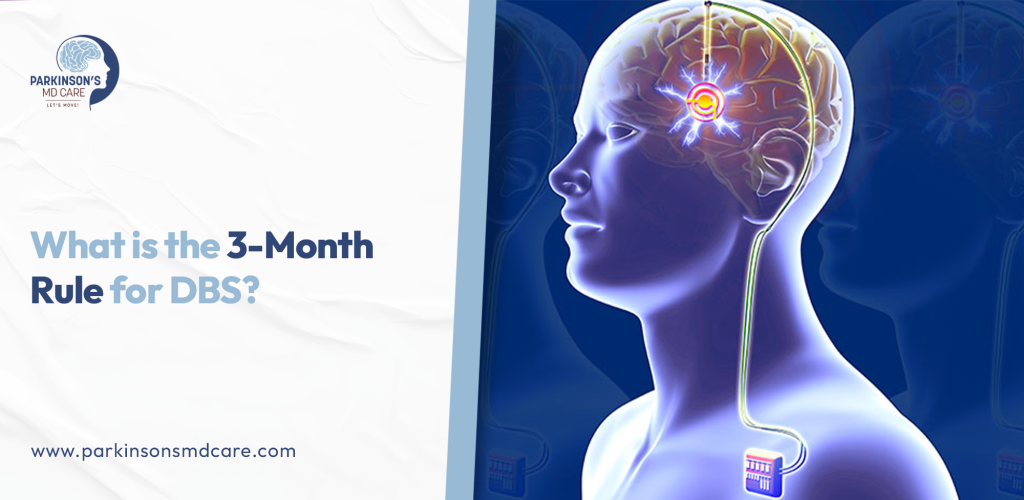
DBS is an acronym for deep brain stimulation. When medications no longer effectively control Parkinson’s symptoms, hope often lies in DBS. Many people living with Parkinson’s disease undergo this treatment and experience a meaningful reduction in their motor symptoms. In this procedure, electrodes are implanted in specific areas of the brain to deliver controlled electrical stimulation that helps regulate abnormal movements.
Today, DBS surgery in Pakistan is increasingly accessible, offering advanced treatment options for patients seeking specialized movement disorder care. Why does the 3-month rule matter so much to the overall success of DBS treatment? Understanding the answer to this question helps patients set realistic expectations and make confident, informed decisions about their care journey.
The surgeons implant electrodes in the brain that are connected to chest devices. It sends electrical impulses that target tremor, stiffness and slow movement in certain areas. Patients often hear the 3-month rule. It refers to a post surgical observation and programming period that follows the DBS Implantation.
The three-month period represents a structured and monitored phase of recovery and optimization. It is a crucial waiting period that allows specialists to fine-tune stimulation settings to achieve the best possible therapeutic outcome.
During surgery, only electrode placement is done. Its functional adjustment and setting are made during follow-up visits. During this period, neurologist movement disorder specialists make ongoing adjustments to the stimulator.
These settings include the fine-tuning of the voltage, pulse width, and frequency, by analyzing the symptoms. The brain needs time to adapt to electrical stimulation.
These are the right combinations of settings that often take weeks to identify. Even small changes in barometers can produce significantly different results. There is also a biological reason behind this time frame. The surgical procedure itself causes a temporary effect known as the legion effect.
Here, the act of placing the electrode in the brain produces short-term symptom relief. This inflammation effect fades away over the first few weeks.
That is why the true benefits of stimulation become clear after the three-month mark. Early evaluation can lead to misleading conclusions. So better understanding of the actual working of DBS takes time.
Three months is not a random number. Clinical research and years of practice have shown that most patients begin to reach stable results within this phase. As new hardware is implanted in the brain. Brain tissue begins to react and cause swelling around the electrode. This reaction fades over weeks.
The scar tissues then form and affect the signal flow. So patients report ups and downs to their condition early. Also, Dr. Jawad A. Bajwa doctor makes sessions for adjustments with ongoing feedback. It will allow the care team to further fine-tune the device effectively.
Parkinson’s MD Care stands out for personalized DBS support in the Parkinson’s space. Our team of neurologists and programmers specialized in rapid, precise adjustments of post surgery. While focusing on movement disorder care, they also pair DBS with nutrition plans and exercise proven for speedy recovery. Their outcome beat averages, 70% of patients see full benefits by 3 months. Their expert support groups connect patients during the weight and share their tips that are their anxiety.
Once the 3-month period is complete, most patients get a clear picture of how much benefit DBS treatment is giving them. For many people with Parkinson’s disease, the results are meaningful. They got reduced tremor, smoother movement and a few OFF periods. Also, in some cases, they experience a greater ability to engage in daily activities. Although these improvements do not reverse the disease itself, they can greatly improve the quality of life.
You can experience more ongoing fine-tuning even after these 3 months for much better responses. Basically, DBS therapy is not a one-time set-and-forget treatment. As time passes by, disease also changes. The stimulator settings may need timely review and adjustments. For this purpose, regular follow-ups or appointments with the movement disorder specialist are generally recommended. It is done to keep the therapy performing at its best.
Once the wait is over, many people resume work or their hobbies. DBS is not a cure. It manages symptoms by buying time for new drugs like stem cells. Even with advances, the 3-month rule reminds us that the brain needs adjustment periods to respond with adaptation.
The 3-month rule for DBS surgery is a structured, evidence-based approach. This waiting period allows for careful evaluation and optimization of the stimulator settings. DBS is one of the most effective options in Parkinson’s disease treatment, offering meaningful improvement in motor symptoms over time. Recovery and device adjustment require patience, which is why this 3-month window is crucial.
Patients undergoing DBS surgery should understand that unimproved symptoms early on do not mean the treatment has failed. Some individuals respond more slowly, and follow-up appointments with their specialist are essential for productive communication and effective adjustments.
The programming phase during this period must be guided by a skilled neurologist, as the expertise of the care team is what makes DBS therapy, tremor treatment, or even dystonia surgery truly successful.
Parkinson’s MD Care specializes in advanced movement disorder care, with a focus on personalized DBS management. Their experienced neurologists monitor patients closely throughout the 3-month programming phase, making individualized adjustments to maximize results.
For patients with newly implanted DBS devices or those experiencing suboptimal outcomes, Parkinson’s MD Care provides comprehensive evaluations and expert second opinions. Choosing Parkinson’s MD Care ensures a smoother journey through the 3-month rule and beyond, with proven results in Parkinson’s disease treatment, tremor treatment, dystonia surgery, and DBS surgery, earning a 95% satisfaction rate from verified reviews.
WhatsApp us