Dehydration is a state in which there is less than the normal level of hydration in the body. It occurs when fluid loss is greater than fluid intake, disturbing the body’s delicate internal homeostasis balance. Even a modest fluid shortage can harm physical performance and overall health. Proper hydration is crucial for human survival and optimal organ function.
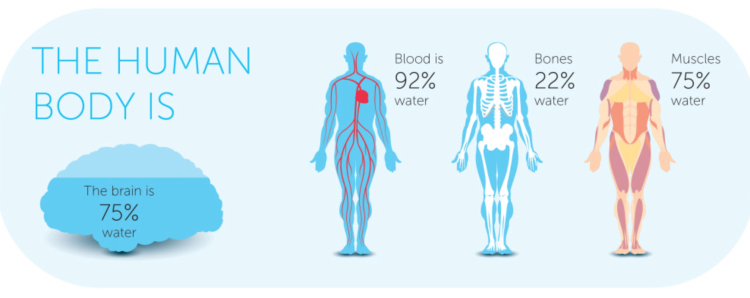
Water is the most essential nutrient in the human body. After oxygen, it is the most important and primary element required for life. About 60% of the human body is made up of water. Many people associate hydration only with skin glow, but every physiological process depends on adequate water levels.
A slight deficiency does not only cause muscle fatigue or dry skin; it also affects the deep functioning of complex organs, including the brain. At Parkinson’s MD Care, we emphasize the importance of hydration in maintaining neurological health and preventing complications related to brain function.
The brain is extremely sensitive to changes in the body’s hydration levels and is made up of nearly 75% water. It depends on proper hydration to send and receive electrical signals effectively, which requires a healthy balance of electrolytes.
Water also supports essential processes such as nutrient delivery, waste removal, and maintaining the stability of brain cells.
Even mild dehydration can negatively affect mood, concentration, and overall cognitive performance. For individuals undergoing parkinson’s disease treatment, dystonia treatment, tremor treatment, or deep brain stimulation surgery at a neurology center, staying properly hydrated becomes even more important to support optimal neurological function and recovery.
Our brain is a dense organ that works in the rigid structure of the skull. It has little tolerance for brain volume(1-2%) changes that are often due to loss of fluids. The brain and its cells contain about 73-75% water. It makes it a more water-dependent organ. MRI scans show the dehydrated brain has less brain volume.
The water within the brain serves as a cushion for delicate neuronal structures. It helps in facilitating the oxygen and glucose transport to the brain cells.
After oxygen, glucose is the food for the brain, and water is the medium. It also requires removing waste from brain cells by a system called the glymphatic system.
The electrolytes, like Na+, K+ and Cl, maintain fluid equilibrium. These electrolytes regulate osmotic pressure . They control distribution of water between the intracellular and extracellular spaces.
The brain shows active responses towards fluid changes. The minor fluid or water loss in the brain disturbs its functioning. So the brain puts efforts in filling the gap of water loss in the body, to execute everyday tasks actively.
When fluid levels drop, the osmoreceptor neurons in the hypothalamus of the brain detect that there is an increase in osmolarity. Increased osmolarity means less fluid and more solvent. So it triggers a thirst signal. It also gives signals to the pituitary gland to release ADH, which instructs kidneys to reserve water by reabsorption.
At the cellular level, water supports the electrochemical gradient. It maintains the volume of glial cells and neurons. The electrical impulse from the brain requires an aqueous environment for performing all neurochemical reactions. It is where neurochemical synthesis and enzymatic reactions occur. That’s why the little shifts in fluid levels can trigger disturbances and harm brain functioning.
The hydration and water-sensitive brain cells have a direct relation. More hydration results in better brain functions. The lesser water content, the less activity performance. When our body is dehydrated. Then brain cells contract or shrink. Also, the brain pulls away from the skull.
This physical pull stresses the meninges from the skull and puts pressure on neurons around it, which is why a headache occurs. Dehydration sets the brain vascular system to dilate the vessels to maintain the blood flow. This cellular disturbance affects the neuron’s ability to respond and communicate actively.
This reduces the blood volume, known as hypovolemia. When fluid is reduced, then blood becomes thick. This more viscous blood is hard to pump to vital organs, including the brain. The brain has 2% weight of the total body.
Under normal hydration status, it uses 15-20% of the body’s blood supply. But when this fluid level is reduced then metabolic demand increases. The oxygen and glucose supply to the brain becomes limited. Actually, neurons cannot store energy independently. So a compromised situation shifts their firing and communication ability. So it slows down the speed of neural communication and cognitive processing.
Sodium and potassium ions are handled with the electrochemical gradient. It takes place across the neural membranes. This results in nerve signalling. When there is less hydration, thus, the resting membrane potential of neurons becomes destabilized.
Under dehydration status, the Na+ imbalance shows hyponatremia and causes the neurons to swell and misfire. The K+ deficiency affects the repolarization of the action potential. It slows and disturbs nerve impulses. This dehydrative downstream effect cannot allow the nervous to communicate efficiently. It produces confusion and results in slow reaction and improper communication.
Dehydration results in hypovolemia. It is shrinking the temporary brain tissue. It reduces the cortical thickness in regions like the prefrontal cortex that relates with attention, memory and executive functioning. It also puts mechanical stress. But this shrinkage can be reversed by hydration.
Mild dehydration produces temper, tension, and negative mood states. It occurs particularly in women and young adults. This causes irritability in performing even regular functions.
This energy shortfall means less fluid and blood supply. In this way, there is less amount of oxygen and glucose reaching the brain. And the brain is still hungry. So dehydration results in lower energy levels and fatigue or frequent headaches.
When dehydration is not treated or reversed by rehydration for a long time, the brain goes into a stressful condition with compromised energy and oxygen levels. The brain can’t deal with dehydration for so long, as it is very sensitive to a lesser hydration state. It results in putting pressure, which increases tension and uneasiness.
Every mild dehydration results in 2% body mass loss. So don’t ignore any early signs.
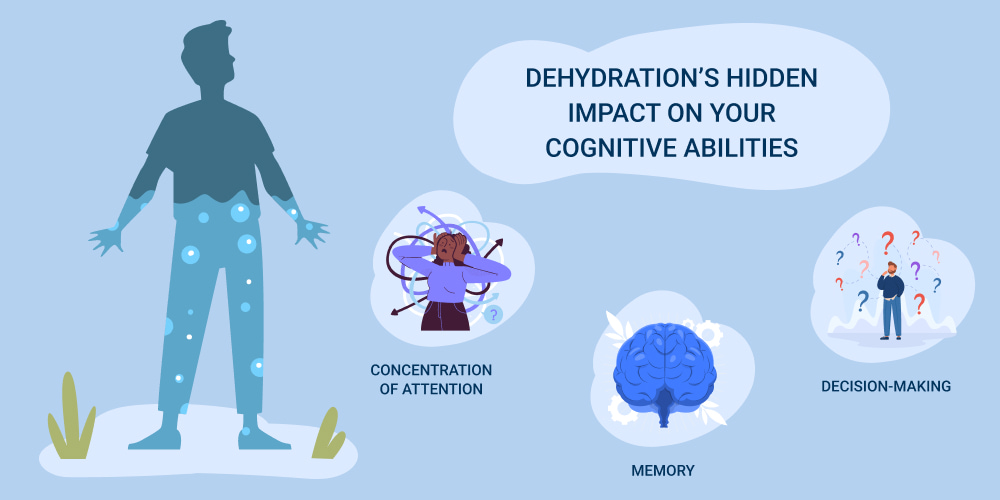
First of all, dehydration affects your focus and concentration as dehydration causes brain cells to lose volume and shrink. The synaptic connections responsible for forming and collecting memories become less reliable.
Then it disturbs your task performance by slowing down your attention. The ability to deal with instructions and remember sequences becomes difficult. It also affects learned information and deteriorates as hydration levels fall. Dehydration induces the short term memory problems as it affects the brain cells and shrinks them.
Dehydration results in a delay of responses by slowing the speed. It affects the neurons transmitting signals across synapses. So, it also impacts badly on driving and the decision making process.
The dehydration results in the brain struggling to interpret, and every signal becomes confused. This results in brain fog and disorganization of thought. So the brain can’t find out the difference between relevant and irrelevant information.
Dehydration results in hypovolemia. It is shrinking the temporary brain tissue. It reduces the cortical thickness in regions like the prefrontal cortex that relates with attention, memory and executive functioning. It also puts mechanical stress. But this shrinkage can be reversed by hydration.
Dehydration can affect almost all kinds of people. But its impact varies based on differences in life stage, body composition, and overall health. Suppose you get information on the early signs of how dehydration impacts different age groups. It will help you prevent serious problems of dehydration.
Children don’t understand the genuine cues of dehydration. Babies and toddlers are prone to the bad effects of dehydration. These signs include dry mouth, no wet diapers, drenched eyes, or laziness. Even mild dehydration can occur rapidly in this age group.
Children and teenagers are often active. They don’t bother to drink enough water. Dehydration can cause fatigue and headaches. It not only reduces concentration but also decreases physical performance in them.
Both male & females are affected by dehydration. Females have less body mass, it leads to more complications. In adults, dehydration is due to less fluid intake or excessive sweating. When they face illness or high temperatures.
The primary symptoms include thirst, dry skin, muscle cramps, dark urine, and low energy levels. Prolonged mild dehydration can also impact kidney function. Adults who work or exercise strongly are at higher risk. Athletic and active lifestyle persons have more drastic effects of dehydration as they lose body water in sweating.
There is a natural decline in the sensation of thirst and reduced kidney function in adults. Older people have no or delayed perception of dehydration. It’s a major risk as the aging brain has diminished thirst sensation. It can lead to dementia.
At ParkinsonMD Care, Dr. Javed Ahmed Bajwa understands the challenges and symptoms. We will help you in making a difference by fighting the complexities of Parkinson’s disease through our virtual clinic services.
The average amount of the average amount of water that should be consumed by a person in a day is 2.5L or more.
For this purpose, you have to eat & drink water. It should be the motivation while following these practical steps.
Hydrating Foods (fruits and vegetables)
Normally, people do not pay much attention to mild dehydration. However, research shows that even a 2% or more decrease in body mass due to fluid loss can significantly affect not only the body but also brain volume and its overall functioning. Brain cells are highly sensitive to water levels, better hydration supports better cognitive performance, while lower water content reduces mental efficiency and activity levels.
When the body becomes dehydrated, brain cells can shrink slightly and pull away from the skull. This movement stresses the meninges and surrounding nerves, which is one reason headaches occur. Dehydration also causes blood vessels in the brain to dilate in an effort to maintain proper blood flow.
These changes can interfere with how neurons communicate and respond. According to Dr. Jawad A. Bajwa, maintaining proper hydration is a simple yet powerful step in protecting brain health. Fortunately, dehydration can be managed and reversed by consistently adding fluids and water-rich foods to your daily routine.
Meeting the recommended daily fluid intake is essential to stay hydrated, mentally sharp, and neurologically healthy.
WhatsApp us